


By strategically optimizing visual elements to your HubSpot portal, you can make it more engaging, easier to navigate, and more effective for your users. Here are actionable examples of how to improve your team's user experience by leveraging visual cues, and intelligent layout.
Highlight important data points with symbols and colors
Using visual cues like symbols, emojis, and colors, can make important information stand out from a page full of information, and add relevant context.
HubSpot has an option to add colored dots or badges to dropdown values, to make these appear consistently in all views.
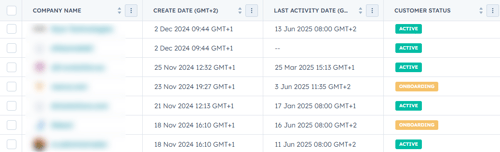
Example of badges to visualize customer status.
Symbols or emojis are also great tools to use in property labels to add relevant context and visual cues, as well as just give your CRM setup a little more personality.
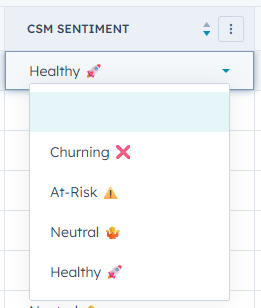
Example of emojis to complement the status text in a property.
Move the most relevant information to the front and center
This is specially important in record views, as these are typically very cluttered form the default setup of HubSpot.
Adding the most relevant information to the immediate view when a team member opens a company record in HubSpot is just half the issue. Removing all the existing clutter of irrelevant or missing information is just as important to make the things you actually need more easily available.
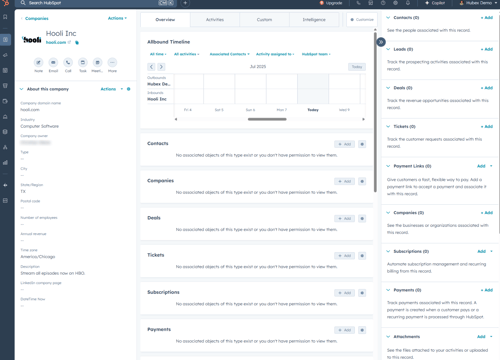
Example of showing everything to the user when most of the data is completely irrelevant.
Now let's make some general changes to highlight the relevant data in this view...
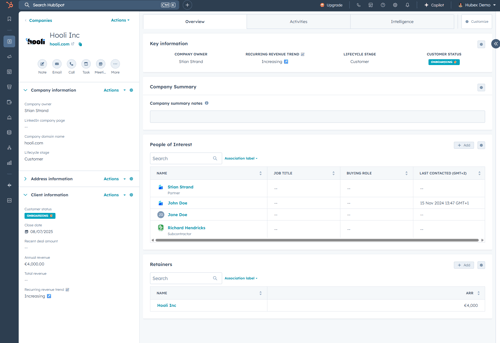
Example of an optimized view with the only relevant information on the screen.
In order to optimize it even more, the "Client information" tab in the left sidebar is also set to to only appear if the lifecycle stage is "Customer", and the address information is collapsed in it's own tab.
You can even configure reports to be embedded in a record view, with only data associated to that specific record.
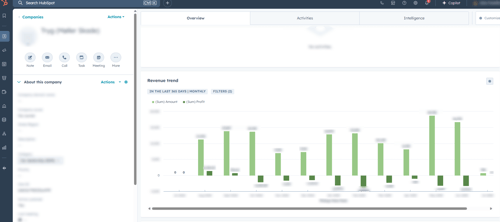
Example of a report with company specific revenue data.
Start simple, and branch optimize for each role
The goal is to create an intuitive and efficient experience for every user, but don't get carried away right from the start. It if often a good idea to start with a generic setup that works well for most teams, and then adapt it even more with separate views for separate teams or roles. What is relevant for a support team may not be relevant for sales, and vice versa.
Work with the users to regularly review your layouts and data presentation to ensure they continue to meet each team's evolving needs. A well-designed HubSpot environment empowers your team to work smarter, not harder, ultimately driving better business outcomes.